

Aesthetics around us.
(October 17, 2024)
Aesthetics around us. (October 17, 2024)
One of these days, I pick up a volume from my son’s collection of comic books and thumb through pages. The illustrations are beautiful. I know I can’t draw like professionals. Somehow, I have a sense to feel that my illustrations are “distorted”.
Why do we feel some shapes are “perfect” and “beautiful”? Is this aesthetic sense innate or acquired?
(The following block is not a text block but a image block, because I do not know how to insert greek letters and equations in a text block.)

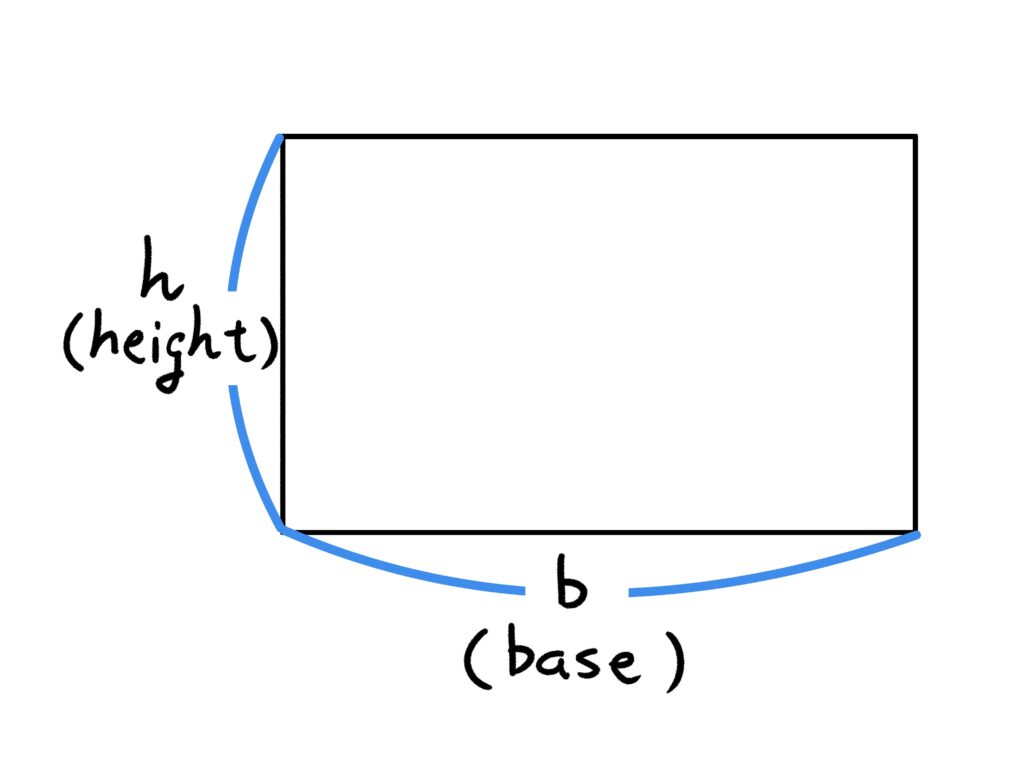
The golden ratio is also stated as the self-referencing iteration;

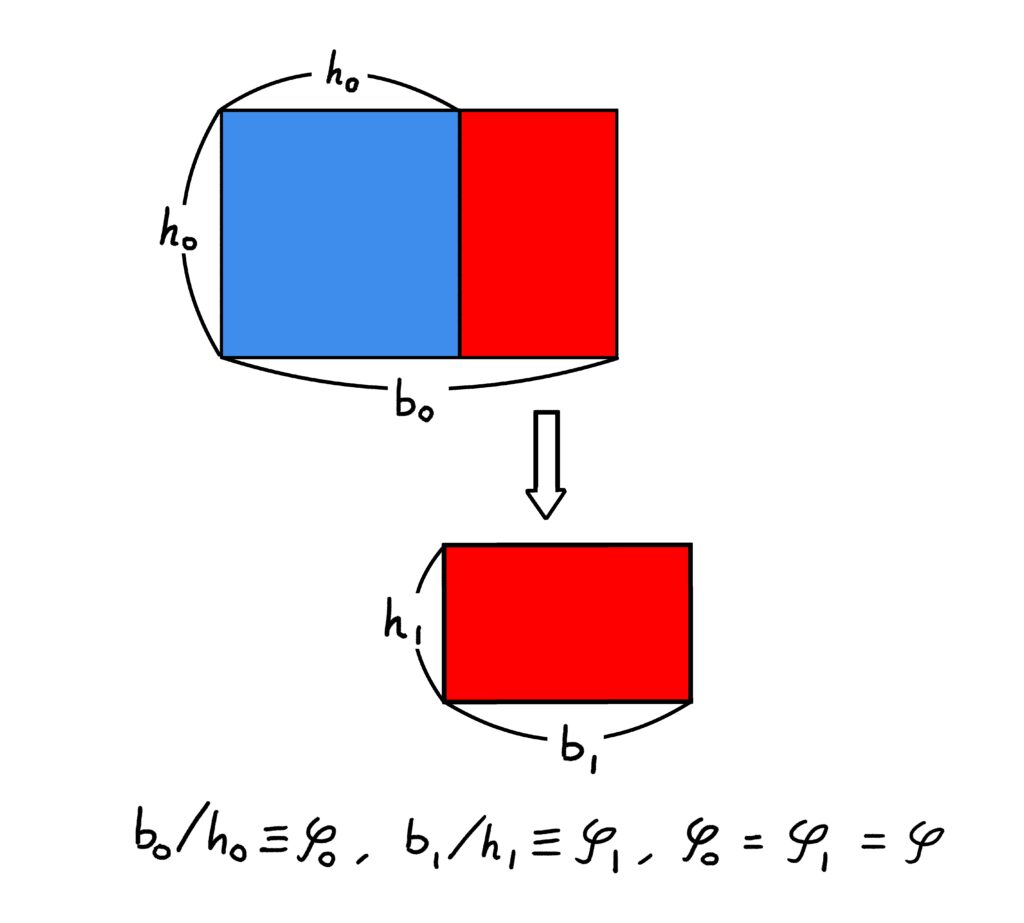
Keen eyes might detect a small deviation from the golden ratio. (Something is not right about the rectangular.)
Maybe, there are physical and mathematical rules which generate beautiful things. A few weeks ago, I came across a news of mathematicians who found rules behind Van Gogh’s painting “Starry Night”. Not only among visual arts, but also other forms of art, too. When we listen to music, we detect harmony and disharmony. J. S. Bach is said to have a mathematical sense to compose harmony.
When I was a high school student, I came across a story of Glenn Gould. Glenn Gould raised quite a stir in music world. Critics said he was revolutionary (for better or worse). So, I picked a disk and listened several times. Not a student of music was I. The performance didn’t give me a clue why it was sensational. I made a hypothesis that it was sensational because his performance was a deviation from standard and orthodox styles. So, I chose a disk that sounded like standard and orthodox, and listened many times. After this, I listened to Gould again. Suddenly, in my mind’s view, I saw a not-so-young pianist savant, being not understood nor accepted by authorities, in a skid row gin joint. Yet, the pianist did not look unhappy for he was allowed to perform the way he wanted.
Obviously, deviations from orders can create arts because disorders appeal to our emotions and imaginations. In From a Buick 8 (2002), you see a beautiful stream-lined 1953 Buick Roadmaster, but you also sense something is wrong about the car. Maybe, a small deviation from the order. On a deserted street in twilight time, you see a man in distance coming toward your way. The man looks ordinary, but you also notice something is not quite right about the man. Maybe, you’d better turn back and run while you still have time.
Of course, there exist orders before disorders, like lights and shadows. In Dead Poets Society (1989), John Keating (Robin Williams) explains a metric system for scientific evaluation of poems to his students, then trashes the system. He also encourages his students by citing a Latin phrase “Carpe Diem” (Seize the Day). Maybe, he could have said “Break the Rules” as well, but he didn’t because his students are yet to learn rules. Some years ago, I read an auto-biography of an artist. I am sorry I forget who he was, but an episode left me an impression. When the artist was a high school student, he was thought to be good-for-nothing by many of his teachers at school. Oneday, in a classroom, while other students were working on assignments, the artist-to-be focused on drawing a large circle on his notebook. Noticing this, a teacher walked up behind him. The teacher’s next action, I believe, determined the future course of the student. Instead of scolding him, the teacher stated in low voice “this is a beautiful circle”.
To me, The Shining (1980) is one of the best movie adaptations based on Stephen King’s stories. Although Mr. King himself is said to disapprove the film (so he produced a TV mini-series for his own in 1997), the aesthetic visual representation by Stanley Kubrick is undeniable. Some years ago, I watched the DVD movie and found that it was filmed in standard frame size. At the theatre in 1980, I didn’t pay much attention to the screen size because I was stanned and fascinated by the film. Except the opening scene which shows an aerial view of a winding passage through the Rocky Mountains, almost all the suspense take place in the closed confinement of Overlook Hotel. Obviously, wider frame size could not have captured the suspense of Danny on tricycle pedaling through maze-like corridors of the hotel, or Danny’s desperate run through the snow-covered garden maze.
Mr. King didn’t appreciate The Shining (1980) because of the casting which failed to capture the terror Mr. King wanted to send to the readers. In the movie, the escape for survival was scary. But the most disturbing and scary part is the process of losing sanity. An ordinary but a little stressed family man gradually transforms from a caring father to a maniac murderer. If we take Jack Torrance’s view point (Am I losing sanity and turning into a murderer of my family, like Delbert Grady?), we may understand the core element of modern psychological horror stories. I think Mr. King tried to capture this process in his TV mini-series in1997.
References:
Dead Poets Society (1989), directed by Peter Weir, written by Tom Schulmar, distributed by Buena Vista Pictures.
The Shining (1980), directed by Stanley Kubrick, based on the story by Stephen King, distributed by Warner Brothers.
The Shining (1997), TV mini-series, directed by Mick Garris, based on the story by Stephen King, produced by Warner Brothers Television.
King, Stephen, From a Buick 8 (2002).
